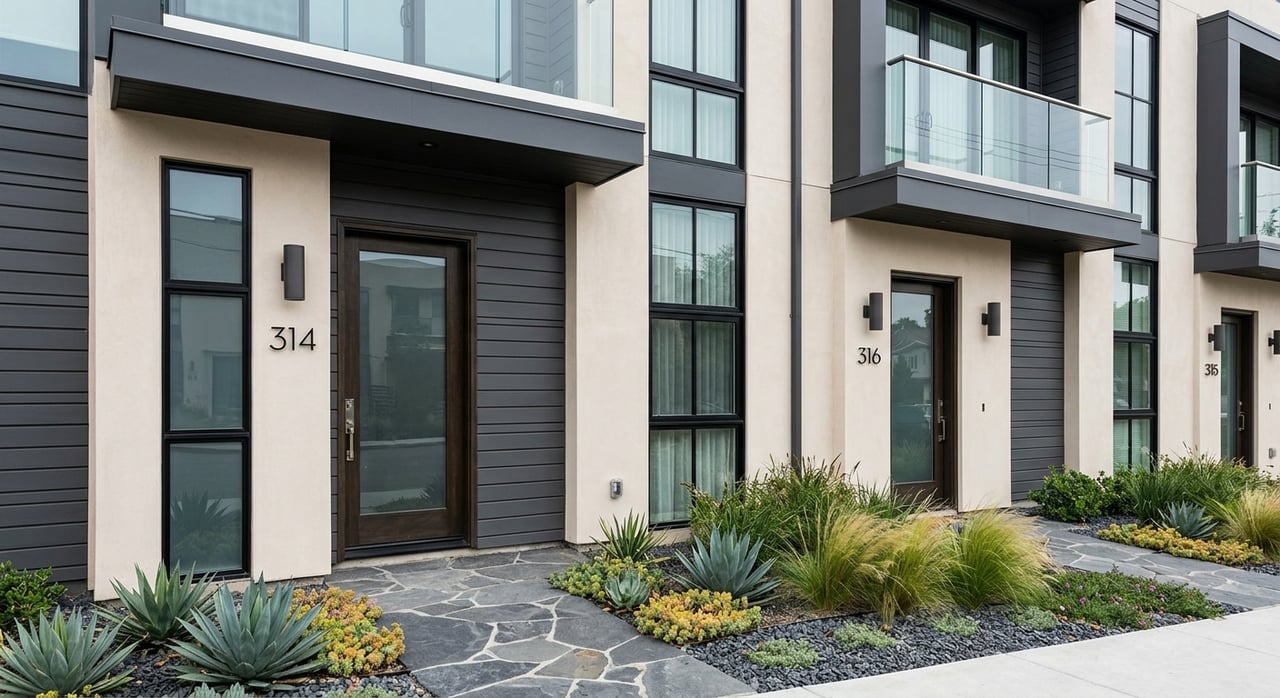
Investing In Greenwood Village Condos And Townhomes
June 4, 2026
June 4, 2026
If you are thinking about investing in Greenwood Village condos and townhomes, the big question is not whether the area is desirable. It clearly is. The real question is whether a specific unit, in a specific building, with a specific HOA, works on paper and supports your long-term goals.
That is where many investors get tripped up. Greenwood Village offers strong location fundamentals, but it is also a high-cost market where broad rent averages do not always justify the asking price. In this guide, you will learn what makes this submarket appealing, where the numbers can get tight, and what to review before you write an offer. Let’s dive in.
Greenwood Village benefits from a mix of employment access, transit, and everyday convenience that tends to support demand for low-maintenance housing. The city is home to part of the Denver Tech Center, Greenwood Plaza, and the Village Center, and it has direct access to I-25, nearby I-225, and connections to both DIA and Centennial Airport.
For renters and owners alike, mobility matters. Greenwood Village also has three light rail stations within city boundaries, which adds another layer of appeal for people who want easier commuting options. That kind of location strength is one reason condos and townhomes can stay attractive here over time.
The lifestyle piece also matters. The city has about 40 miles of trails, including 5.47 miles of the High Line Canal Trail within Greenwood Village. For many buyers and renters, that combination of access, outdoor amenities, and lower-maintenance living can be a strong draw.
The local renter pool is likely shaped by the city’s income and education profile. Census QuickFacts show a median household income of $149,029, a bachelor’s-degree-or-higher rate of 78.6%, an average household size of 2.31, a median gross rent of $2,123, and a mean travel time to work of 19.9 minutes.
Those figures suggest demand may come from professional households, relocating employees, couples, and some downsizers looking for convenience and a smaller maintenance footprint. Greenwood Village is also 64.1% owner-occupied, which points to a market where rental options exist, but where available inventory can feel limited depending on the product type.
For an investor, that means your likely renter is not just looking for square footage. They may also care about commute efficiency, building rules, parking, storage, and the overall ease of living in the property. In a premium market, those details can influence rent performance more than citywide averages alone.
Greenwood Village is not an entry-level investment market. Redfin currently shows 35 condos for sale at a median listing price of $995,000 and 19 townhouses at a median listing price of $656,000.
Those price points matter because they create a higher bar for positive cash flow. If you are looking at condos in particular, the purchase price alone may already push the math into a tighter range before you even add HOA dues, taxes, insurance, vacancy, and financing.
That does not mean a deal cannot work. It means you need to underwrite at the unit level, not the city level. A well-positioned townhome or a condo with strong in-building rent comps may perform very differently from the local median.
Rental data in Greenwood Village points in the same general direction, but the numbers vary by source. Zillow shows an average rent of $2,009 as of April 30, 2026, down 4% year over year. Zillow Rental Manager shows an all-bedroom average rent of $2,800 on May 29, 2026, while Realtor.com reports a median rent of $1,891, down 6.06% year over year and 27.16% over three years.
The important takeaway is not to treat those figures as interchangeable. Each platform uses a different methodology, so they are best used as directional signals rather than exact underwriting inputs. If you rely on a broad average without checking the actual building or complex, you can easily overestimate rent potential.
In a market like Greenwood Village, published citywide rents may be too thin to support top-end condo pricing. That is especially true when HOA costs are high or when the unit does not have standout finishes, views, layout, or amenities.
Using Realtor.com’s $1,891 median rent against current median asking prices produces rough gross yields of about 2.3% for condos and 3.5% for townhomes before HOA dues, taxes, insurance, vacancy, and financing costs. Using Zillow’s $2,009 average rent only moves those figures to about 2.4% for condos and 3.7% for townhomes.
That is the heart of the investment story here. Greenwood Village may make more sense for buyers focused on long-term demand, quality location, and lower-maintenance ownership than for investors seeking immediate cash flow.
Townhomes may offer a more workable starting point than condos based on current asking prices, but that does not remove the need for careful analysis. One high HOA payment, one special assessment, or one overly optimistic rent estimate can change the entire picture.
Available inventory appears thin, but not absent. Zillow shows 73 for-sale listings and 37 available rentals. Realtor.com shows 78 homes for sale and 72 homes for rent, while Redfin’s pages show 35 condos and 19 townhouses for sale.
For you, this means competition can be selective rather than broad. There may not be a huge supply of low-priced opportunities, so weaker deals do not always get rescued by bargain entry points. A strong unit can outperform the city average, but a mediocre one may struggle to pencil.
This is one reason local comp work matters so much. In a smaller, expensive submarket, the spread between an average unit and a highly rentable one can be significant.
Price trend data also points to a premium market, though not every source measures the same thing. Zillow places the average Greenwood Village home value at $1,423,585, up 1.2% over the past year. Realtor.com reports a median listing price of $1,699,500, up 12.4% year over year, while Redfin reports a median sale price of $1,699,123 over the last three months, up 9.3% year over year.
These figures should be labeled carefully if you compare them, because average value, median listing price, and median sale price are not the same metric. Still, they point to the same reality: Greenwood Village is a high-priced market where pricing, unit condition, and building quality matter a great deal.
If you are investing here, appreciation may be part of the story. But you should avoid assuming appreciation will make up for weak fundamentals at purchase. A disciplined buy still matters.
In condo and townhome investing, the HOA can shape your return as much as the unit itself. Colorado’s HOA Center says it helps consumers understand rights and responsibilities under CCIOA, and that boards can adopt rules governing common areas and, to a certain extent, units themselves, including rental and leasing restrictions.
That means you need to confirm more than whether rentals are technically allowed. You also need to know if there is a rental cap, a waitlist, a minimum lease term, or any owner-occupancy rule that could affect your plans.
DORA also notes that most associations must register annually with the Division of Real Estate. It states that failure to register on time can preclude enforcement of assessment liens. While that point may not decide a purchase on its own, it is another sign that association health and compliance deserve close review.
According to DORA’s due-diligence advisory, buyers should review the Declaration, CC&Rs, common elements, plat map, assessment allocation, and restrictions before signing a contract. Buyers are also encouraged to watch for deferred maintenance, ask about litigation and lender HOA questionnaires, and speak with current residents about dues increases and board performance.
That guidance is especially useful in Greenwood Village, where high purchase prices can leave less room for surprises. A building with weak reserves or repeated dues increases can quickly hurt your projected return.
Before you move forward, focus on both the numbers and the lived reality of the property. If the building is well run, financially stable, and aligned with your rental strategy, that can reduce risk in a meaningful way.
Property taxes are another part of underwriting that deserves parcel-level review. Greenwood Village says property taxes for city addresses are administered by Arapahoe County, and the city describes its own mill levy as among the lowest in the Denver metro area, with the city’s share only a small part of the total bill.
That is helpful context, but it is not enough to build a pro forma. You should always estimate the actual tax bill for the specific property rather than using a citywide shortcut. In a higher-priced market, even small assumptions can create a meaningful gap in your numbers.
Greenwood Village can be a smart place to invest if your priorities include long-term demand, convenient access to major employment centers, transit connectivity, and a low-maintenance property type. It may also appeal if you want an area that tends to attract professional households and relocating renters.
It may be less attractive if your main goal is strong immediate cash flow. Current condo and townhome prices are high relative to published citywide rent estimates, which means the margin for error is slim.
In other words, this is a market where selectivity wins. The right unit, in the right community, with the right HOA and believable rent comps, can be compelling. The wrong one can look good at first glance and disappoint once the real costs are added in.
If you are weighing condo or townhome opportunities in Greenwood Village, a calm, data-backed strategy can help you avoid expensive guesswork. Georgia Haskell can help you evaluate the numbers, compare properties, and move forward with a plan that fits your goals.

October 22, 2026
October 15, 2026

October 8, 2026
October 1, 2026
September 24, 2026
September 17, 2026

September 10, 2026

September 3, 2026

August 27, 2026
Georgia combines tenacity, warmth, and integrity with deep market insight and strong negotiation skills, enabling her to advocate effectively for every client. Whatever your real estate goals, she is dedicated to helping make them a reality.

44 COOK ST DENVER CO 80206