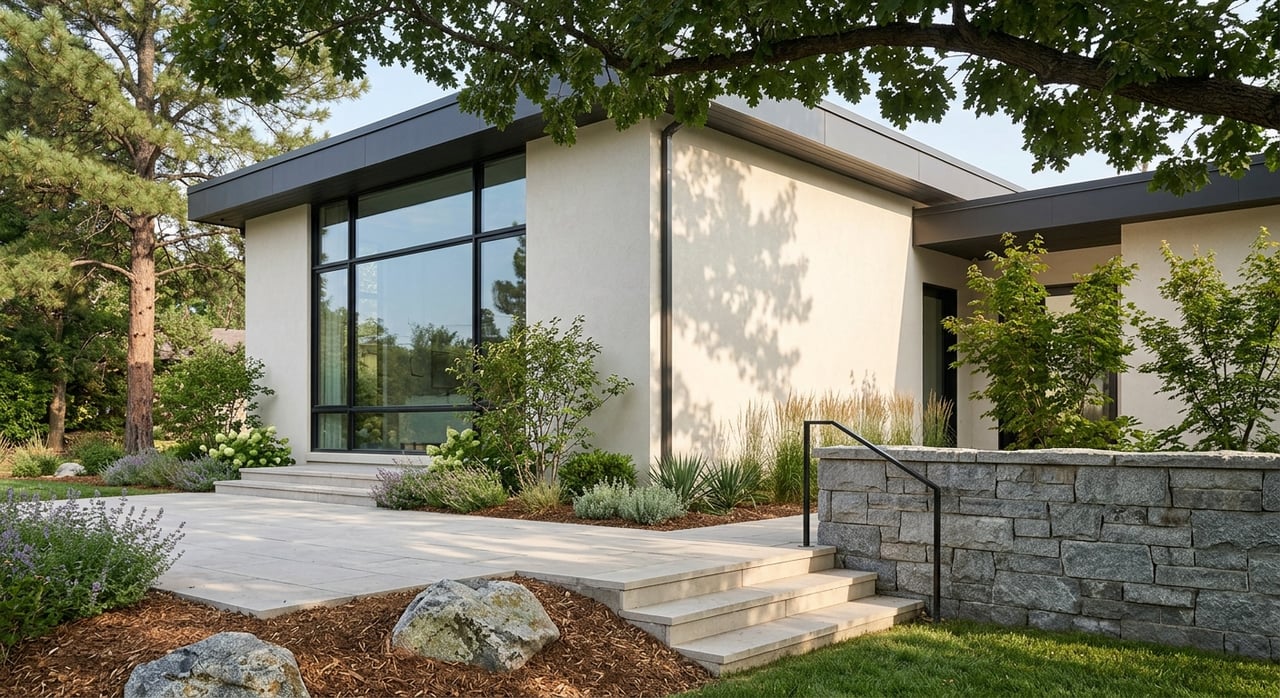
Your Guide to Greenwood Village Neighborhoods
May 14, 2026
May 14, 2026
If you have ever looked at Greenwood Village listings and wondered why the neighborhood names feel a little hard to decode, you are not alone. This city is best understood through seven main residential planning areas, each with its own feel, housing pattern, trail access, and commute orientation. If you want a clearer way to match your lifestyle with the right part of Greenwood Village, this guide will help you sort through the options with confidence. Let’s dive in.
Greenwood Village describes its residential areas as seven principal planning areas. These are the city’s basic building blocks, and they group smaller subdivisions by shared geography and character.
That matters because MLS community names do not always tell the full story. In practice, it is often easier to understand a listing when you place it inside one of these seven larger areas.
The West End sits on the far west side of Greenwood Village, bounded by Belleview, University, Orchard, and Clarkson. The city describes it as a single-family detached area with about one dwelling unit per acre on average.
If you are drawn to mature landscaping, larger lots, and a quieter residential pattern, this area may stand out. The neighborhood also has access to the High Line Canal, Rollin D. Barnard Park, and preserved equestrian trails.
From a home-style perspective, this pocket is often associated with postwar ranch homes, updated brick homes, and some Tudor or estate-style properties. For buyers who want room to spread out without leaving Greenwood Village, West End offers one of the clearest low-density options.
Rural Homestead is bounded by Belleview, Orchard, University, and Colorado. Among Greenwood Village neighborhoods, this is the most clearly rural in character.
The city plan describes it as very low density at about 0.4 dwelling units per acre. You will also find horse pastures, large trees, and a mix of gravel roads and limited paved streets, which gives the area a distinct setting compared with more conventional suburban blocks.
Alexander Lane Equestrian Park sits in the heart of the area, and the Colorado Boulevard Equestrian Trail connects through the neighborhood to the High Line Canal and Marjorie Perry Nature Preserve. If acreage, horses, and minimal through-traffic are high on your wish list, Rural Homestead is one of the strongest fits.
The Preserve is bordered by Colorado Boulevard, Holly Street, Orchard Road, and Belleview Avenue. The city identifies it as a master-planned residential neighborhood with generally low- to mid-density single-family homes at about one dwelling unit per acre.
What makes this area stand out is its connection to wetlands, natural areas, and the High Line Canal. If you want a neighborhood with a strong open-space presence, Preserve is one of the clearest examples in Greenwood Village.
Buyers often notice the custom-home feel here. Public listing descriptions frequently highlight ranch-style homes, modern estates, and amenity features such as pool, tennis, and playground access.
Greenwood Hills is bounded by Belleview, Orchard, Holly, and Quebec. It is a low-density single-family area with lots ranging from just under one acre up to 2.5 acres.
The city plan points to semi-rural streets, natural drainage corridors, wetlands, and planning goals that protect mountain views. That combination gives Greenwood Hills a spacious feel while still keeping you close to major employment and service areas.
If you want mature trees and estate-sized lots without the more rural road pattern found in some other parts of the village, Greenwood Hills is a strong match. It is also often associated with access to Westlands Park and the Denver Tech Center.
Sundance and Orchard Hills sit east of Yosemite, west of Havana, north of Peakview, and generally south of the Berry Avenue alignment. The city describes these as mature medium- and low-density neighborhoods designed around drainage ways and parks.
This area has some of the strongest connections in the city to the Denver Tech Center, Greenwood Plaza, Village Center, and local transit. That makes it especially appealing if your daily routine involves commuting, light rail, or staying connected to nearby office and commercial hubs.
Sundance Park and Orchard Hills Park serve as major anchors here. The city also notes that Orchard Hills is intentionally foot- and bike-access only, which is a useful detail if you value trail and pathway connectivity.
Cherry Creek is east of Yosemite and generally north of the Berry Avenue alignment. The city describes it as primarily single-family, with larger-lot homes to the south and smaller-lot homes to the north.
Average density here runs about 3 to 5 dwelling units per acre, which is a different feel from the larger-lot western pockets. The area’s identity is closely tied to Cherry Creek High School, Village Greens Park, and Cherry Creek Reservoir.
Village Greens Park North connects to the Cherry Creek Trail and the Dayton Street light rail station. If you want east-side trail access and proximity to reservoir recreation, Cherry Creek is one of the strongest planning areas to explore.
Cottonwood Grove is south of Cherry Creek Drive, west of Peoria Street, north of Caley Avenue, and east of Nome Street. The city classifies it as a medium-density area, with a more specific focus on higher-density townhome and single-family living at roughly 8 to 12 dwelling units per acre.
This is helpful if you are looking for a different ownership style than the larger-lot estate pockets. The city’s vision for the area emphasizes mountain and reservoir views along with high-quality landscaping.
In practical terms, Cottonwood Grove often appeals to buyers who want more of a lock-and-leave, low-maintenance setup. It can be a particularly useful option if you want Greenwood Village access with less yard upkeep.
The easiest way to narrow Greenwood Village is to think about how you want to live day to day. Instead of focusing only on subdivision names, start with density, outdoor access, and commute patterns.
Here is a simple way to think about the seven planning areas:
This kind of sorting can save you time early in your search. It also helps you focus on the areas that fit your routine, not just the homes that happen to pop up first online.
Lifestyle in Greenwood Village is closely tied to movement and outdoor access. The city says it has about 40 miles of trails, including 5.47 miles of the High Line Canal Trail.
In broad terms, the west side connects more closely to the High Line Canal, while the east side ties into the Cherry Creek Trail. That distinction can be useful if you know whether you prefer canal-side paths, reservoir access, or east-side bike and walking connections.
Greenwood Village also has three light rail stations. RTD identifies Arapahoe at Village Center as a Rail Station Park-n-Ride on the E and R lines near Caley and Yosemite, which adds another layer of convenience for some buyers.
Schooling in Greenwood Village is address-specific, which is one of the most important things to keep in mind during your search. Residents are served by both Littleton Public Schools and Cherry Creek School District, and placement depends on the location of the residence and attendance boundaries.
The city also notes a campus cluster around Greenwood Elementary, Campus Middle, and Cherry Creek High. West Middle School also has a Greenwood Village address.
If schools are part of your home search, it is smart to verify the exact assignment for any property you are considering. Boundaries control placement, so the same broad neighborhood may not always mean the same school path.
For buyers, understanding these planning areas helps you shop smarter. You can quickly tell whether a home lines up with your priorities, whether that means larger lots, trail access, light rail convenience, or lower-maintenance living.
For sellers, this framework helps position a home more clearly. A property is not just in Greenwood Village. It is also part of a specific planning area with meaningful characteristics that shape how buyers experience it.
That kind of clarity matters in marketing and pricing strategy. When your home is presented in a way that connects location, lifestyle, and design, buyers can understand the value faster.
If you want help sorting through Greenwood Village neighborhoods or figuring out which area best matches your next move, Georgia Haskell brings a calm, consultative approach that makes the process feel much more manageable.
October 22, 2026
October 15, 2026
October 8, 2026
October 1, 2026
September 24, 2026
September 17, 2026

September 10, 2026

September 3, 2026

August 27, 2026
Georgia combines tenacity, warmth, and integrity with deep market insight and strong negotiation skills, enabling her to advocate effectively for every client. Whatever your real estate goals, she is dedicated to helping make them a reality.
44 COOK ST DENVER CO 80206